
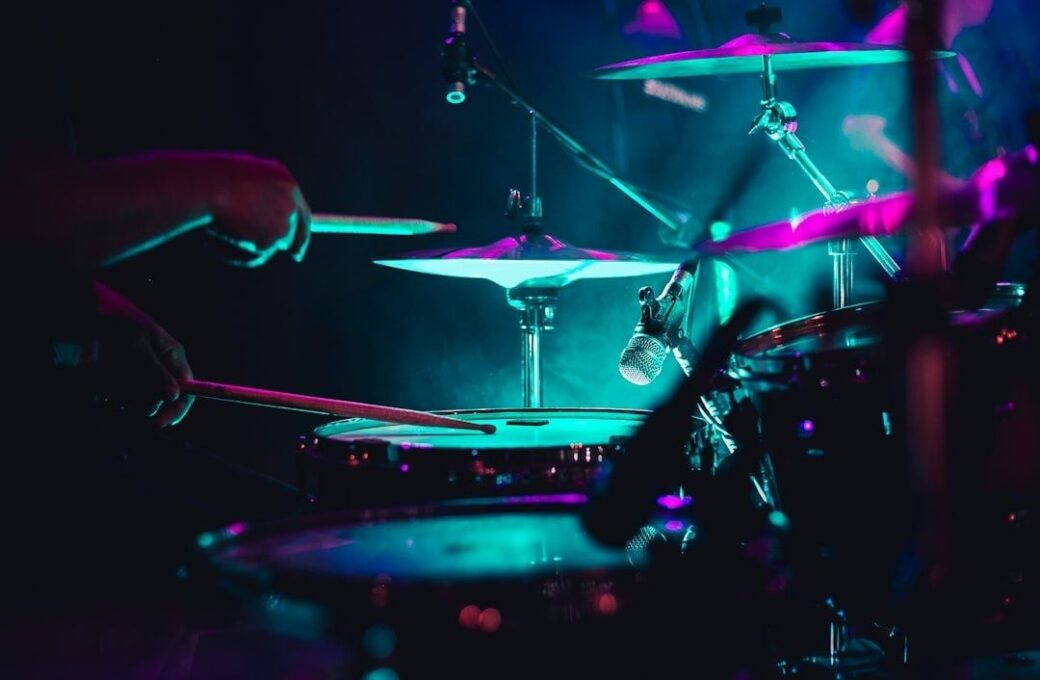
When Percussion Becomes a Pure Wall of Sound
The first full-speed blast beat does not arrive like an ordinary drum groove. It detonates. Kick, snare, cymbal, and sometimes a second stream of bass-drum notes fire in such close succession that the ear initially registers a single violent mass, a wall of sound with no obvious gaps to grab. For a listener raised on backbeats and four-on-the-floor patterns, the experience can feel less like hearing a drummer keep time and more like watching rhythm itself break apart under pressure.
That shock grew out of the collision between hardcore punk”s stripped-down velocity and extreme metal”s appetite for darker weight. In the early grindcore underground, bands pushed punk”s short songs, abrasive guitar tones, and anti-polish attack toward a new threshold. Napalm Death became central to that transformation, with Mick Harris helping turn rapid alternating strokes into a recognizable aesthetic language. The beat was not simply fast. It was hostile, compressed, and designed to make duration feel unstable.
Classical ideas of meter usually depend on hierarchy. A listener identifies the strong beat, hears subdivisions beneath it, and tracks a repeating pattern. Blast beats complicate that process by distributing similar attacks across limbs and registers, often erasing the comfortable difference between pulse and texture. What began as abrasive chaos evolved into a form of athletic, psychoacoustic artistry, where conditioning, equipment, production, and perception all determine whether speed becomes expressive or merely blurry.
From Grindcore Chaos to Engineered Precision
In grindcore, the blast beat functioned as an aesthetic weapon. Mick Harris and Napalm Death did not present it as a polished exercise in symmetrical technique. Early Napalm material was fast, dangerous, and seemingly on the verge of collapse. Harris later described the band”s early energy as spontaneous and largely unrehearsed, an important distinction in a scene whose power came from volatility. The playing sounded less like a metronome than a nervous system overloaded by urban frustration, political anger, and sheer sonic density.
That language changed as extreme metal absorbed the technique. Death metal drummers tightened the relationship between kick drum and guitar riff, increased the amount of subdivision, and treated the blast as an architectural component rather than a brief eruption. By the late 1980s and early 1990s, tempos moved beyond 200 BPM with increasing regularity. At those speeds, a drummer cannot rely on brute force alone. Economy of motion, rebound control, relaxed grip, balance, breathing, and a reliable internal pulse become the difference between a convincing performance and a flailing approximation.
The history is not a straight line from primitive to advanced. Different scenes developed different solutions, and older blasts retained a raw identity that highly edited modern productions sometimes flatten. Still, several paradigm shifts stand out:
- Alternation became infrastructure. Kick and snare patterns began supporting entire riffs rather than appearing only as short bursts.
- Speed became sustainable. Drummers developed finger control, heel-toe double-bass approaches, swiveling-foot methods, and push-pull motions to reduce muscular strain.
- Density became compositional. Blast beats started controlling transitions, climaxes, and atmosphere instead of functioning as constant background violence.
- Precision became audible. As production grew tighter, tiny timing differences between limbs could determine whether the sound felt explosive or mechanically sterile.
For a deeper look at the musicians and techniques that established this vocabulary, explore the blast beat originators and the early extreme-drumming tradition. The crucial point is that grindcore did not merely make punk faster. It changed what listeners considered a complete rhythmic event.
The Anatomy of Modern Blast Variations
“Blast beat” describes a family of patterns rather than one fixed formula. The traditional or Euro blast generally alternates bass drum and snare while the cymbal marks rapid subdivisions. A hammer blast commonly places bass and snare together, producing a heavier, more unified punch. Hyper and bomb-style blasts increase the density or redistribute the accents, often making the kick drum sound like a continuous machine stream beneath repeated snare attacks. Suffocation-associated variations add further snare activity and create a denser, more lurching profile.
The gravity blast represents a different mechanical idea. Instead of lifting and returning the stick through a conventional full stroke, the drummer uses the rim as a fulcrum, allowing the hand and stick to generate multiple rapid snare hits with a compact motion. It is not magic, and it is not automatically superior. Its usefulness depends on drum setup, rim height, stick choice, rebound, and the player”s ability to keep the resulting attacks even. Specialty approaches such as freehand blasts, triplet-based patterns, heel-toe bass drumming, and swiveling-foot technique all solve the same underlying problem: how to create maximum rhythmic information with minimum wasted movement.
| Technique | Core structure | Primary demand | Typical sonic effect |
|---|---|---|---|
| Traditional or Euro blast | Alternating kick and snare with rapid cymbal subdivision | Independence and even spacing | Driving, open, forward-moving intensity |
| Hammer blast | Kick and snare strike together | Unison control and power without tension | Heavy, blunt, highly synchronized impact |
| Hyper blast | Very dense kick and snare activity | Extreme endurance and microscopic timing | Continuous pressure with reduced rhythmic gaps |
| Bomb or cannon blast | Repeated bass-and-snare attacks with emphatic weight | Low-end consistency and accent control | Thunderous, massive, riff-supporting force |
| Gravity or freehand blast | Rapid snare strokes generated through rebound and fulcrum mechanics | Compact hand motion and rebound management | Machine-gun snare texture and high surface density |
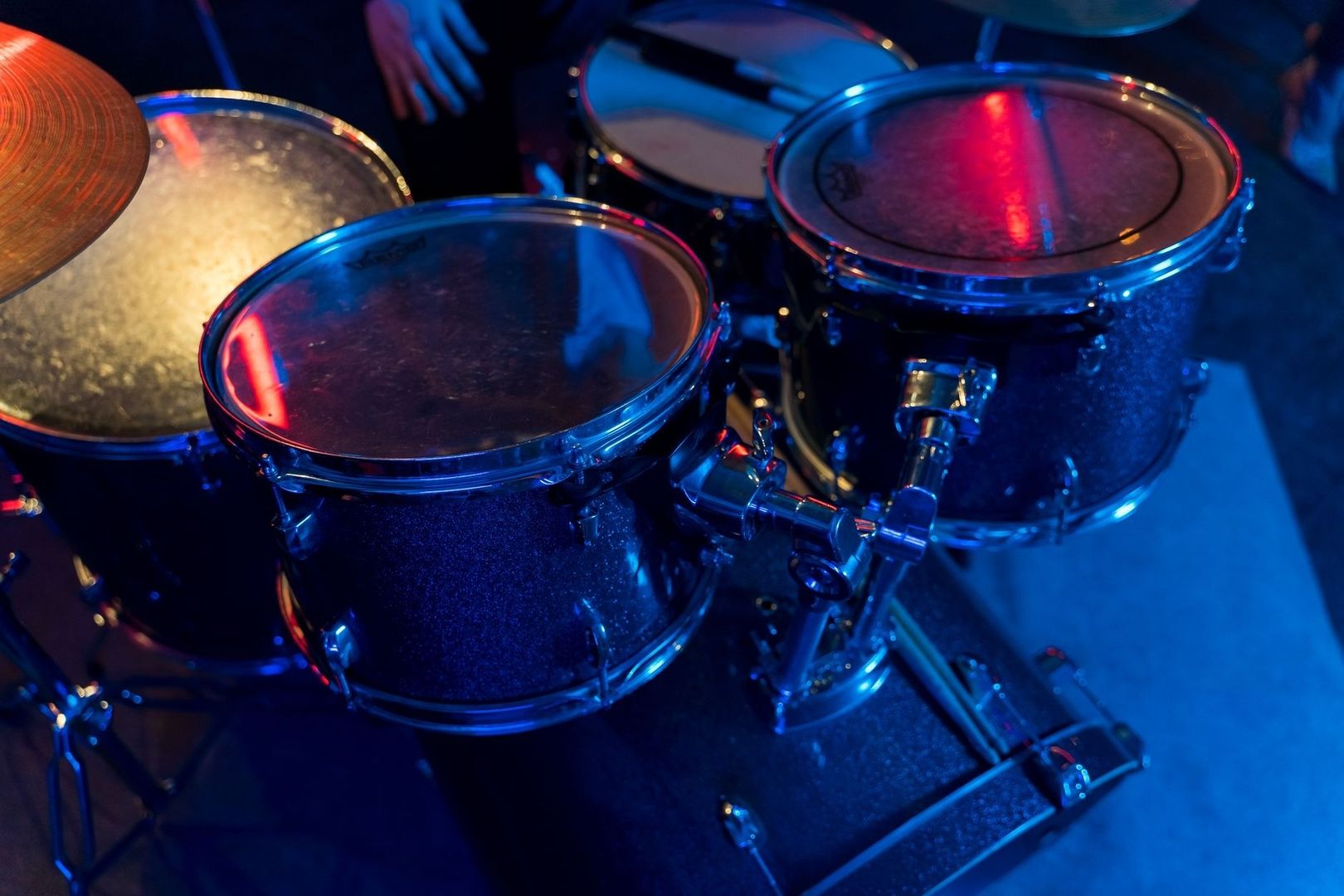
The Psychoacoustic Illusion of Extreme Tempo
At moderate speeds, listeners can identify individual drum hits with relative ease. A snare lands, the kick answers, and the cymbal divides the bar into recognizable pieces. As the tempo rises, the auditory system begins grouping those impulses into streams. The brain stops treating every stroke as an isolated event and starts hearing a higher-level object, much like the way a rapid sequence of film frames becomes motion rather than a collection of still images.
This is why a blast beat can sound like a drone even though it is built from discrete attacks. The individual hits remain physically present, but their separation becomes perceptually less important than their combined envelope, spectral balance, and accent pattern. A dense snare stream creates a bright, abrasive band of energy. Fast kick drums reinforce the low end, while cymbals spread the event across the stereo field. The result is not rhythm disappearing. It is rhythm changing scale.
That change also explains the hypnotic quality of sustained blasting. Repetition can narrow attention, especially when accents are subtle and the pattern maintains a stable internal grid. The sensation resembles meditation in an extreme register: a listener locks onto a stream of impacts, loses the sense of ordinary bar lines, and experiences motion as texture. Yet the effect depends on a delicate balance. If every hit is equally loud, perfectly quantized, and saturated beyond distinction, the blast becomes acoustic obliteration. If the drummer leaves too much inconsistency, the stream loses its propulsion. Clarity and violence must coexist.
Biomechanics, Triggers, and Studio Realities
High-speed drumming is an ergonomic discipline before it is a test of courage. The seat height, snare position, cymbal angle, pedal tension, stick grip, and distance between drums all affect how much unnecessary motion enters the performance. Finger control can keep the stick moving while the wrist remains comparatively relaxed. Double-bass players may use heel-toe articulation or a controlled swivel to divide work across the foot rather than repeatedly lifting the entire leg. The best players look almost calm because efficient technique hides the enormous coordination taking place.
Triggers complicate the old authenticity debate. A drum trigger converts an impact into an electronic signal that can activate a sample or reinforce the acoustic drum. In extreme metal, that can make fast kick patterns intelligible inside dense guitar arrangements, especially when low tunings and heavily compressed mixes leave little room for a natural beater sound. Triggers are not automatically a substitute for technique. They are a production tool, much like close microphones, editing, gating, sample reinforcement, and carefully chosen heads.
Long before modern digital audio workstations, engineers at studios such as Morrisound used labor-intensive methods to repair or replace difficult drum passages. Time code, MIDI sequencing, tape editing, and manually calculated timing adjustments made it possible to strengthen performances even when computer-based visual editing did not exist. The technology has changed, but the central question remains familiar: does production clarify a real performance, or manufacture one that cannot survive outside the studio? The strongest answer is usually practical rather than ideological. A recorded part should communicate the intended music, and a drummer claiming authorship should be capable of reproducing its essential demands live.
A responsible training approach includes several non-negotiable priorities:
- Build speed gradually. Practice clean, relaxed strokes at a tempo where every limb remains controlled, then increase the metronome in small increments.
- Separate endurance from maximum velocity. Short bursts at the upper limit develop speed, while longer sessions at a manageable tempo develop stamina and consistency.
- Monitor tension and pain. Burning fatigue can be normal; sharp pain, numbness, or persistent joint discomfort signals a technique or setup problem that should not be ignored.
- Train breathing and balance. Holding the breath or collapsing the torso wastes energy and makes timing deteriorate under pressure.
- Record the details. Slow-motion video and isolated drum tracks reveal uneven spacing, excessive stick height, and bass-drum notes that disappear inside the mix.
Instructional resources such as Derek Roddy”s Evolution of Blast Beats reflect this broader view. Speed matters, but so do coordination, independence, balance, breathing, and endurance. A blast beat is only impressive when it remains musically legible, physically sustainable, and responsive to the riff around it.
Redefining the Outer Horizons of Rhythm
The blast beat permanently altered modern composition by proving that percussion could operate as both pulse and atmosphere. It can drive a riff, erase the expected backbeat, create panic beneath a vocal line, or turn a transition into a sudden pressure wave. Its influence extends beyond grindcore and death metal into black metal, hardcore, noise, electronic music, and experimental composition, where dense repeating impulses can be treated as texture, process, or ritual rather than conventional groove.
Its lasting power comes from the tension between human limitation and artistic intention. Technology can reinforce a kick, align a passage, or make a dense mix readable, but the musical idea still begins with a body attempting something difficult. When velocity is shaped by accents, tone, space, and arrangement, the blast beat stops being a simple demonstration of speed. It becomes a way to make time feel unstable, physical, and strangely transcendent. The rules of rhythm were not destroyed. They were pushed so far outward that a new set of possibilities emerged in the noise.