
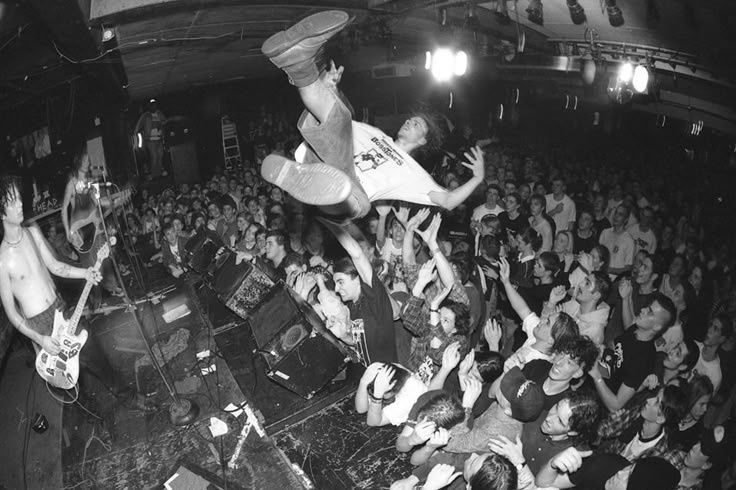
When Speed Met Fury on the Underground Stage
Early-1980s heavy music carried a visible class system. Long-haired metalheads claimed the territory of amplified spectacle, leather, and towering guitar heroes. Shaved-head punks occupied smaller rooms, faster songs, and a deliberately stripped-down sense of danger. The divide was cultural as much as musical. One side was associated with epic fantasy and technical ambition; the other with confrontation, economy, and the refusal to play by respectable rules.
That separation began to collapse because both scenes were sick of the same enemy: commercial arena rock polished into safety and pop engineered for passive consumption. Underground musicians wanted volume with consequences. They wanted songs that sounded physical, immediate, and difficult to ignore. In Northern California, the Bay Area’s long-defunct Ruthie’s Inn became one of the key historical spaces where those demands collided during the mid-1980s, while the storied Sunday matinees at CBGB gave New York bands and audiences a similarly volatile meeting ground before the venue’s closure decades later. In those cramped rooms, genre boundaries mattered less than whether the band could make the floor erupt.
The resulting crossover was not a begrudging truce between rival tribes. It was a technical synthesis. Punk supplied relentless momentum, blunt emotional force, and collective vocal attack. Metal contributed riff architecture, instrumental discipline, and a taste for escalation. Together, those ingredients engineered the speed, breakdowns, rhythmic violence, and visceral lyricism that would define much of modern heavy music. The crossover did not soften either tradition. It sharpened both.
The Sonic Architecture of a Hybrid Genre
Punk’s basic weapon was the downstroke, repeated with such urgency that the guitar became almost percussive. Hardcore pushed that approach harder, favoring compact structures, shouted hooks, and drumming that seemed to chase the song toward collapse. Thrash metal absorbed the velocity but imposed a different kind of control. Palm-muted chugs created a dense, machine-like low end, while tightly arranged riffs could turn a short song into a sequence of linked attacks, sudden pivots, and acceleration points.
Crossover thrash emerged when those methods stopped competing and began reinforcing each other. A band could use a hardcore gang shout as a chorus, then answer it with a serpentine metal riff. A verse might race at punk speed before dropping into a half-time section built for bodily impact. Solos became shorter and more functional, often serving as another burst of pressure rather than a separate display of virtuosity. For a useful overview of the style’s historical identity, consult this history of crossover thrash.
| Tradition | Core musical traits | Typical effect |
|---|---|---|
| Traditional punk | Downstrokes, compact arrangements, direct lyrics, urgent tempos | Immediate confrontation and communal release |
| Classic thrash | Palm-muted chugs, intricate riffs, precision drumming, tempo changes | Mechanical force and escalating tension |
| Crossover thrash | Hardcore shouts, metal riffing, breakdowns, rapid structural shifts | Physical impact combined with technical aggression |
Speed became a shared weapon rather than a stylistic dividing line. Punk treated speed as proof of urgency, while metal treated it as a platform for muscular precision. Crossover bands recognized that those meanings could coexist. The fastest passage could communicate panic, while a sudden breakdown could turn that panic into collective movement. That contrast remains central to heavy music, from metallic hardcore to modern thrash revivals.
Vanguard Records That Rewrote the Rules
D.R.I. provided one of the clearest demonstrations of crossover’s expanding vocabulary. Early material relied on extremely short bursts, songs that struck, shouted, and vanished before conventional rock expectations could settle in. Crossover widened the frame. The band retained hardcore’s hostility but introduced more deliberate riff development, tighter rhythmic transitions, and groove sections that gave the songs weight without draining their speed. The result was not punk diluted by metal. It was a heavier form of attack with more moving parts.
Suicidal Tendencies brought a different kind of pressure. Their identity was rooted in Venice Beach skate culture, street tension, and an outsider’s refusal to behave correctly, yet the music increasingly demanded metallic technique. Riffs became more intricate, guitar leads more prominent, and arrangements more muscular. The band showed that crossover could carry personality as strongly as it carried volume. The music did not merely sound faster or heavier; it made alienation feel kinetic.
S.O.D. transformed the rehearsal-room collision between metal musicians and hardcore instincts into an influential blueprint. The songs were often brief and deliberately irreverent, but the underlying idea was serious: thrash precision could coexist with hardcore’s abruptness, humor, and direct address. That combination helped legitimize the idea that heavy music did not need to choose between technical riffing and street-level immediacy.
Cro-Mags pushed the hybrid toward a crushing urban atmosphere. The Age of Quarrel fused metallic weight with New York hardcore’s sense of pressure, conflict, and survival. Its riffs feel less like decorative heaviness than architecture built around claustrophobia. The record’s importance lies partly in how it made the city itself audible: crowded, hostile, spiritual, and constantly on the verge of rupture.
- D.R.I. expanded hardcore’s short-form violence into more developed thrash arrangements.
- Suicidal Tendencies connected skate identity, street attitude, and increasingly technical metal instrumentation.
- S.O.D. demonstrated how concise hardcore structures could carry precision metal riffing.
- Cro-Mags gave the hybrid a dense urban mood and a more imposing sense of weight.
Record collectors, critics, and scene historians frequently revisit retrospective overviews and debates, including Best ten Thrash Metal records of each era (besides the “big 4”), to trace how seminal crossover releases sit alongside foundational thrash albums. That ongoing critical evaluation matters because it resists the idea that metal history belongs only to the established commercial giants. The underground was not a footnote to the genre’s development. It was the laboratory.
Bleeding Real Estate at Ruthie’s Inn and Sunday Matinees
Crossover was shaped by physical space as much as by guitar design. In a small club, there was no comfortable distance between stage and audience. Sweat, stage dives, shouted choruses, and circle pits turned spectators into participants. A metal fan arriving for the riffs could find a hardcore crowd demanding immediate movement; a punk entering for confrontation could encounter musicianship powerful enough to alter the room’s entire center of gravity. The shared pit became an argument settled through motion.
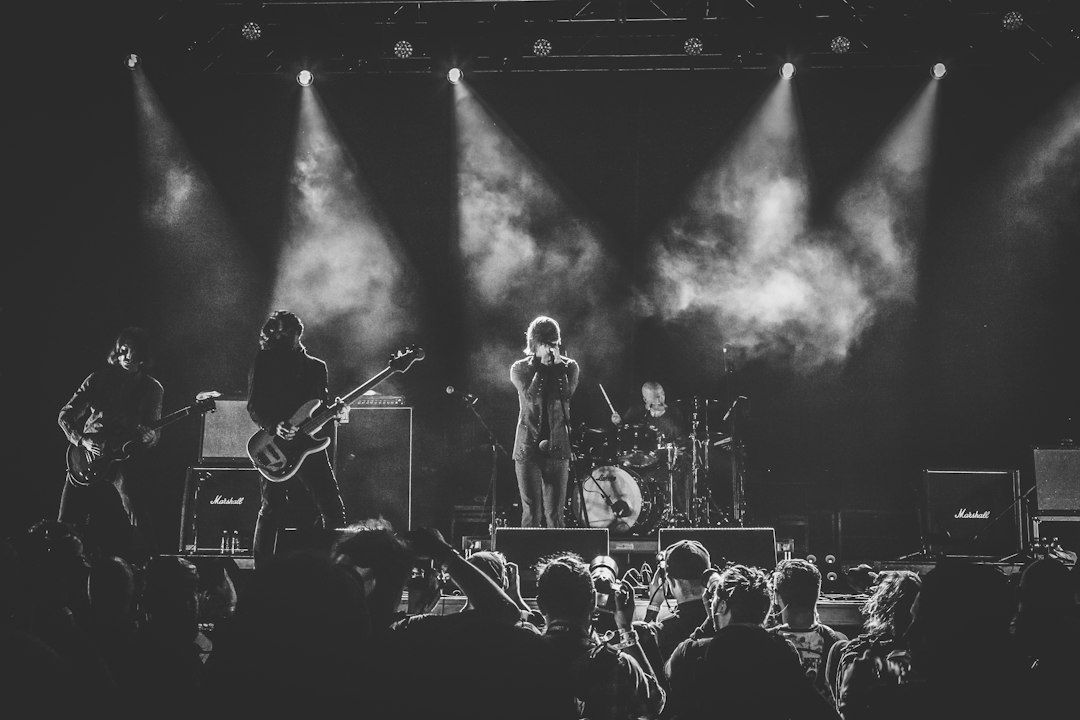
CBGB’s Sunday matinees were especially important to New York’s overlap during the club’s mid-1980s heyday. Parris Mayhew has described Cro-Mags playing a hardcore matinee in 1985, followed by an attempted Sunday metal night, a detail that captures the venue’s shifting identity in that era. The schedule placed different audiences in the same building and made the border between hardcore and metal visibly porous. Groups such as Cro-Mags developed in that pressure zone, where the afternoon’s blunt aggression could meet the evening’s appetite for heavier, more elaborate riffing.
The Bay Area produced a comparable historical bridge through figures such as Paul Baloff and Exodus, who regularly drew audiences to local East Bay clubs like Ruthie’s Inn prior to the venue’s closure in the late 1980s. Baloff’s performance style was less about polished frontman control than total physical commitment, and that rawness could connect with local punks even as Exodus delivered the sharp, fast attack of emerging thrash. Across both coasts, the lyrics also moved away from fantasy and mythology toward street realities, social conflict, distrust, violence, alienation, and the sensation of living without institutional protection.
- The stage became an active boundary zone rather than a protected platform.
- Circle pits translated rhythmic changes into physical events.
- Matinees and metal bills placed rival subcultures in the same rooms.
- Street-level lyrics replaced escapist imagery with immediate social pressure.
The DNA of Modern Heavy Music
By the late 1980s, the crossover formula was no longer confined to its first generation. Leeway showed how New York hardcore could absorb thrash’s intricate guitar language without abandoning swing, attitude, or vocal directness. Maximum Penalty represented another stage in that transition, with late-1980s material drawing on crossover thrash, metal, and hardcore while reflecting the scene’s increasingly crowded stylistic field. Not every experiment aged equally well, but even uneven records document the moment when musicians were testing how far the hybrid could stretch.
That experimentation established a direct route toward 1990s metalcore and groove metal. Metalcore inherited breakdown logic, hardcore vocal patterns, and the sense that a song should be designed for collective physical response. Groove metal slowed selected passages without surrendering heaviness, turning the breakdown from a brief structural surprise into a central compositional engine. Later metallic hardcore bands would push the same principles into darker tunings, denser production, and more extreme vocal techniques.
- Early 1980s: Hardcore and emerging thrash develop in parallel, sharing a hunger for speed and underground autonomy.
- Mid-1980s: D.R.I., S.O.D., Suicidal Tendencies, Cro-Mags, and related acts combine punk urgency with metal precision.
- Late 1980s to 1990s: Bands such as Leeway and other transition acts expand the sound toward metalcore, groove, and more technical hardcore.
- 2000s to the present: Metallic hardcore, crossover revivals, and modern thrash continue refining the same relationship between velocity, breakdowns, and communal force.
The lineage is audible in contemporary bands that treat rhythm as architecture. A riff does not merely accompany the vocal; it controls the room. A pause can be as violent as a blast of speed. A gang vocal can turn an individual lyric into a collective statement. That is the central inheritance of the 1980s crossover, and it explains why the style continues to regenerate rather than remain trapped as nostalgia.
Keep the Pit Moving into the Next Era
Four decades later, the shared pit remains the crossover’s most durable symbol. It represents more than physical intensity. It is a space where distinctions between metalhead and punk, musician and audience, technical execution and raw emotion become temporarily unstable. The best records from that lineage still sound dangerous because they refuse to separate craft from feeling. Tight playing makes the impact sharper, while unfiltered emotion keeps the technique from becoming sterile.
Tribalism can protect a scene’s identity, but it can also limit its imagination. The most inventive breakthroughs usually happen when musicians cross the line that purists are guarding. Seek out the records that place hardcore’s shouted urgency beside thrash’s disciplined riffing, then follow that trail into today’s metallic hardcore, crossover, and underground heavy scenes. The next essential sound may not belong cleanly to either camp. That has always been the point.